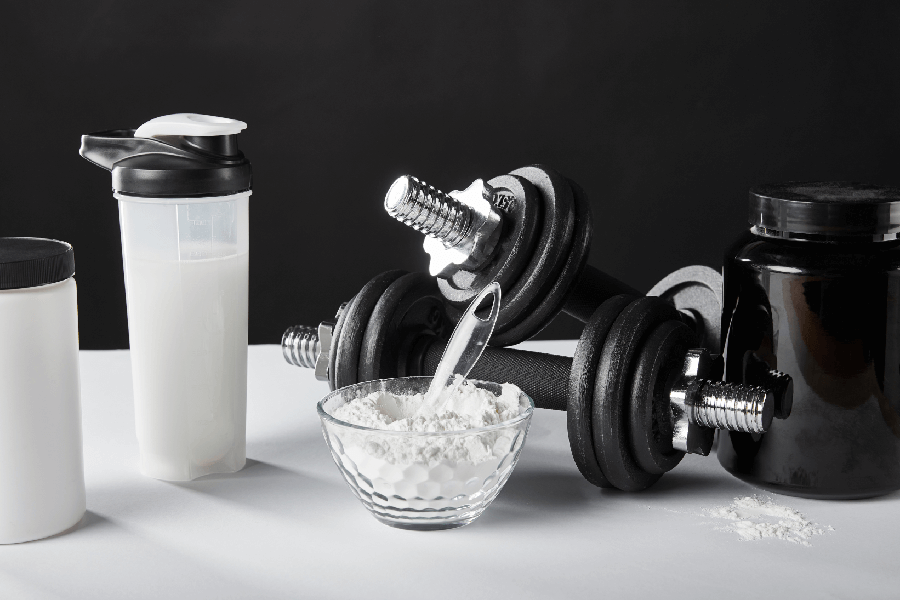
One of the biggest factors in managing muscle retention while in a calorie deficit is getting adequate protein. However, protein on its own won’t be enough. You’re gonna have to lift.
If our goal is fat loss (not weight loss) we should be prioritizing muscle. While the likelihood that we will gain muscle while in a deficit is pretty low, if we approach fat loss with the same vigor and intent as muscle gain we are in a much better place.
The risks of a calorie deficit sans resistance training are mostly in this realm of muscle loss. When we lose muscle there is a bigger risk of weight cycling where we gain back prior weight loss but now with fat mass taking the place of muscle. That just leads to further difficulties in weight loss and maintenance. Double strike.
While there are concerns about lower protein intake than the recommended 1.6-1.8g/kg there is also some buffer room depending upon individual body composition. In addition, there is a protein sparing component to carbohydrates so there may also lie some buffer. What you may encounter is a lower satiety with lower protein which can make the dieting process more difficult.
The good news is that muscle maintenance while in a deficit does not require a high volume or frequency approach. 1-2 sets per week per muscle group taken to failure are likely sufficient to maintain muscle. That could be a couple of circuit training sessions 30 mins each. That combined with a diet of whole foods and increasing movement through steps and some cardio is a great menu for improved health markers as well as weight loss.
TLDR; Lift weights. Eat protein. Walk.
*for a more detailed look at the research behind protein, resistance training & weight loss check out this article https://www.deconstructnutrition.com/is-weight-loss-without-exercise-unethical/
@drbenhouse