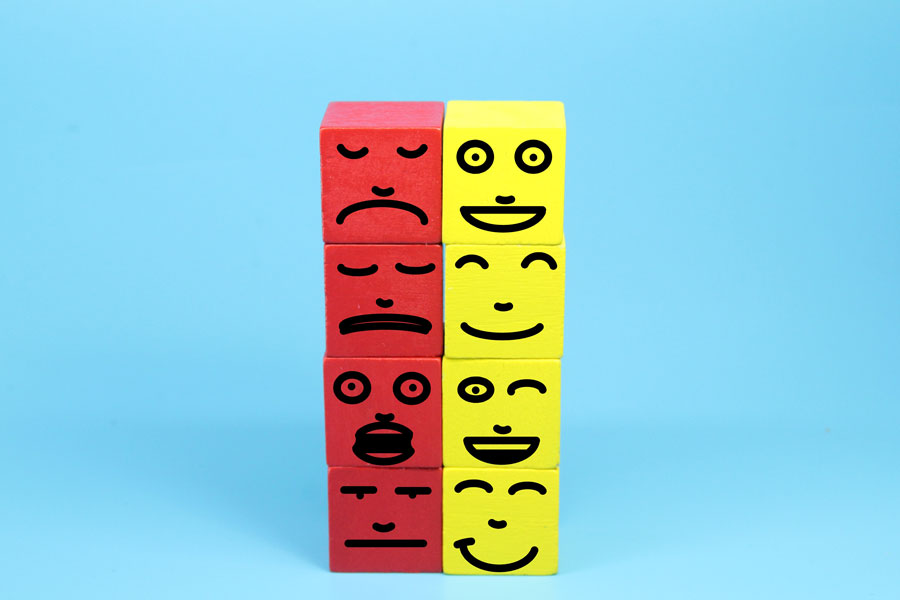
Describing emotion can be very difficult. We often can confuse one emotion for another for reasons such as having an attachment to certain emotions, feeling that some are good or bad. We try to alter our own narrative. So we want to really create separation and work towards a model of self awareness. In this it helps to get granular.
This idea of granularity was presented to me by Dr Lisa Lewis from the emotion research done by Dr Lisa Feldman Barrett. It’s the theory that if we are able to more accurately describe our emotions, like the finest grain of sand, we are happier humans. Imagine being able to discern between anxiety from fear rather than being unsure of whether you are mad or sad. It’s an emotional “maturity” that can be learned.
When feeling an intense emotion come on it is important to examine your feelings and work to categorize them. We apply a logical process to an emotional moment to help bring us into that wise mind or middle path. Then we can begin to objectively determine the reason for the emotion and whether or not it’s effective in the given situation. The key here is granularity.
Emotions have a role. They can be difficult to regulate due to our biology or environment. But if we can learn to get granular, work hard to accurately describe the exact emotion we are feeling, and observe it objectively and without judgement, we can eventually work towards an improved state emotional regulation.